Stop Explaining the Same Landscaping Job Twice
A short job brief can save the crew another phone call. Use six practical handoff details and a cleanup example to keep the agreed work clear.
By Verdis5 min read
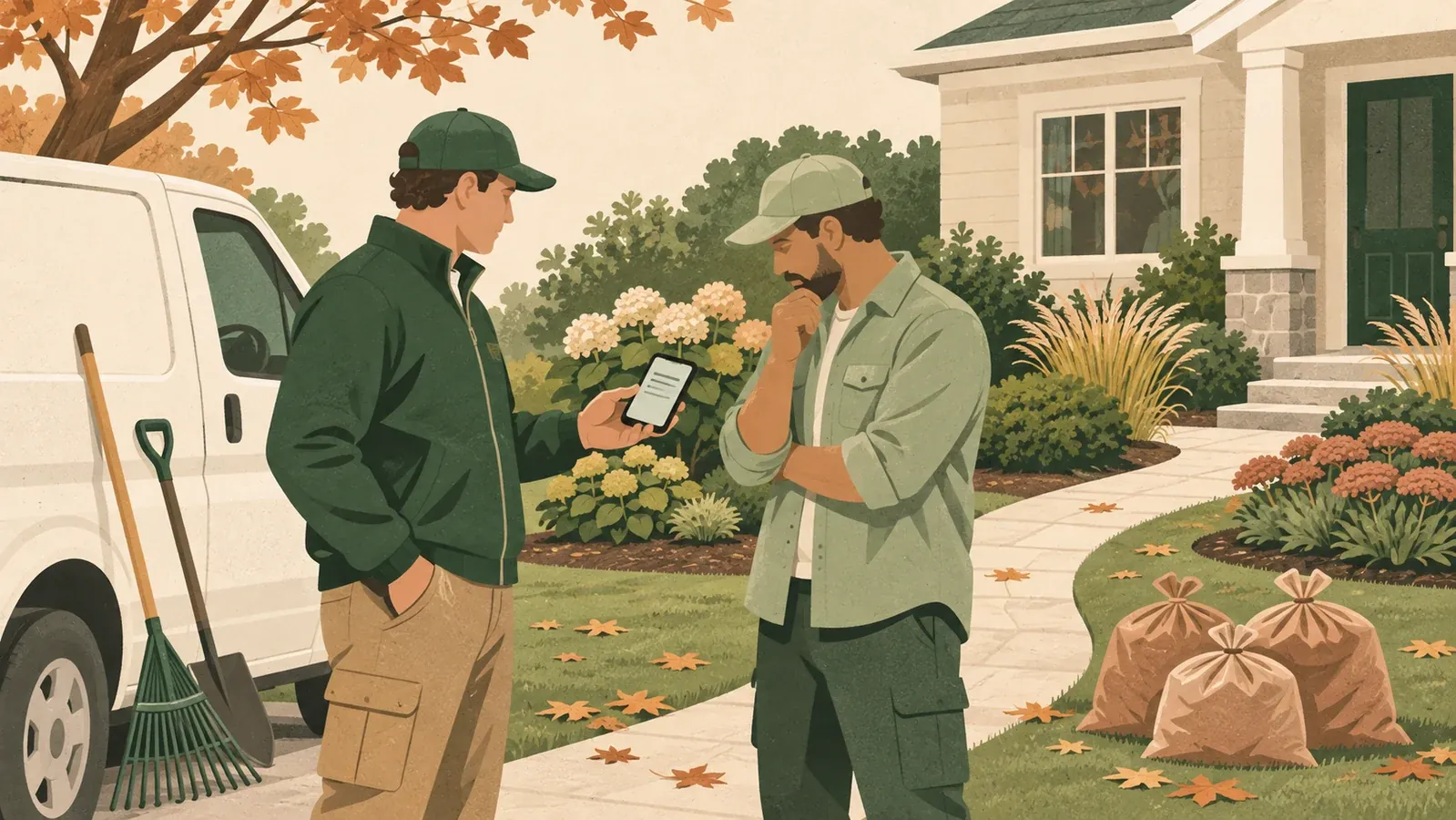
The crew is at the property. Your phone rings: which beds are included, where are the bags going, and did the customer agree to the side yard? You answered those questions when you priced the job. Now you are answering them again while trying to finish your own work.
A useful landscaping job handoff gives the next person enough information to do the agreed work and recognise when to stop and ask. It does not need a long form. It needs a clear scope, practical instructions and one place to find the current plan.
Start with the job you actually sold
Before assigning work, check the accepted scope. A customer asking about an extra service is different from approving it. If the quote covers the front beds and walkway, the job instructions should not quietly become “clean up the property.”
Carry the agreed details into the job record, then add what the crew needs on site. Keep the customer-facing price and your private cost review under the owner’s control. The handoff is about delivering the work, not giving every person every business detail.
Six details worth handing over
1. The right customer and service address
Use the address where the work will happen, which may differ from the billing address. Include a useful property reference if there are several entrances or buildings. Give the assigned person the contact information they need, without circulating unrelated customer details.
2. The work included—and the boundary
Name the areas and services. “Collect leaves from the front lawn and the two beds beside the walkway” is clearer than “fall cleanup.” State important exclusions, such as the rear garden or work still waiting on approval. The aim is to prevent reasonable people from making different assumptions.
3. Access and parking instructions
Record the entrance to use, where to park and any access arrangement already agreed with the customer. Keep gate codes and other sensitive information in the appropriate private record. Check that the assigned person can access the instructions before they leave for the job.
4. What happens to the materials and waste
Say whether clippings, leaves, bags or other materials stay on site or leave with the crew. Identify the agreed collection or staging area. If disposal is part of the price, make that clear before someone arrives without the right transport or fills the wrong container.
5. What finished should look like
Define a few observable checks: the specified beds cleared, the walkway swept and the agreed waste moved. If photographs are part of your normal process, say what they should show and respect the customer’s privacy. A photo can support the record, but it does not replace checking the work.
6. What needs a decision from you
Give the crew a next step for blocked access, unexpected conditions or a customer requesting more work. Identify who can approve a change. “Call me before starting the rear garden” is actionable. “Use your judgement” may leave someone responsible for a pricing decision they were never authorised to make.
Example: a cleanup brief the crew can use
This is an illustrative job brief, not a customer story. Adjust it to the scope and access arrangements you actually agreed.
Customer and location: use the service address on the job record. Arrival: the agreed Friday morning window. Scope: collect leaves from the front lawn, the two front beds and the walkway. Excluded: rear garden and tree work.
Access and parking: use the front entrance; leave the customer’s driveway access clear. Waste: bag leaves and place them in the collection area agreed with the customer. Finish: check the specified beds and leave the walkway clear. Changes: contact the owner before adding another area or changing the waste arrangement.
That brief gives the crew a workable starting point. Add any equipment, material or site-specific requirements the job needs. Avoid turning it into a repeated questionnaire that asks people to enter information the customer or job record already holds.
Check the handoff before the crew leaves
Ask the person taking the job to check the address, scope, access and waste arrangement. One short question—“Anything unclear before you head over?”—can surface a missing detail while you can still fix it. Do not assume that assigning a job proves the instructions were read.
If the same question comes back on several jobs, improve the instruction or template once. If it is unique to one property, keep it with that property. Separate standing information from today’s changes so every visit does not require a fresh explanation.
Use the client onboarding checklist to collect property details
When the plan changes, update the job
A customer may call you while the crew is already travelling. Record the approved change where the work is managed, then contact the assigned person and confirm they understand it. A text can draw attention to the update, but scattered messages make a poor permanent job record.
If extra work needs a new price or approval, settle that before it becomes an assumed part of the original visit. Keep the original scope clear, and record the decision rather than asking the crew to reconstruct it later.
Handle “while you’re here” requests without losing the agreed scope
Keep completion and billing as separate checks
At the end of the job, check what was completed and what remains. A job marked complete does not, by itself, prove the invoice is correct, sent or paid. Review the bill against the agreed scope and any approved additions before sending it.
In Verdis OneTouch, customer and property context stays connected to quotes, jobs and invoices. Groundwork gives crew members their assigned jobs and job instructions on their phones; it is included on Growth and Canopy. The owner still decides the scope, handles changes and reviews billing.
See the Groundwork crew app and assigned-job view
Start with the next job you already have. Put its scope, access, waste arrangement and finish checks together. Ask the person doing the work what is missing. Keep the useful details for next time. The goal is fewer repeat explanations, with a clear place to look when a question does come up.