Route Profitability: Which Lawn Care Routes Are Actually Worth Keeping?
A full route is not the same as a healthy route. Score each route day on six lines, find the stops that drag it down, and decide what to rebalance, reprice or let go before renewals.
By Verdis6 min read
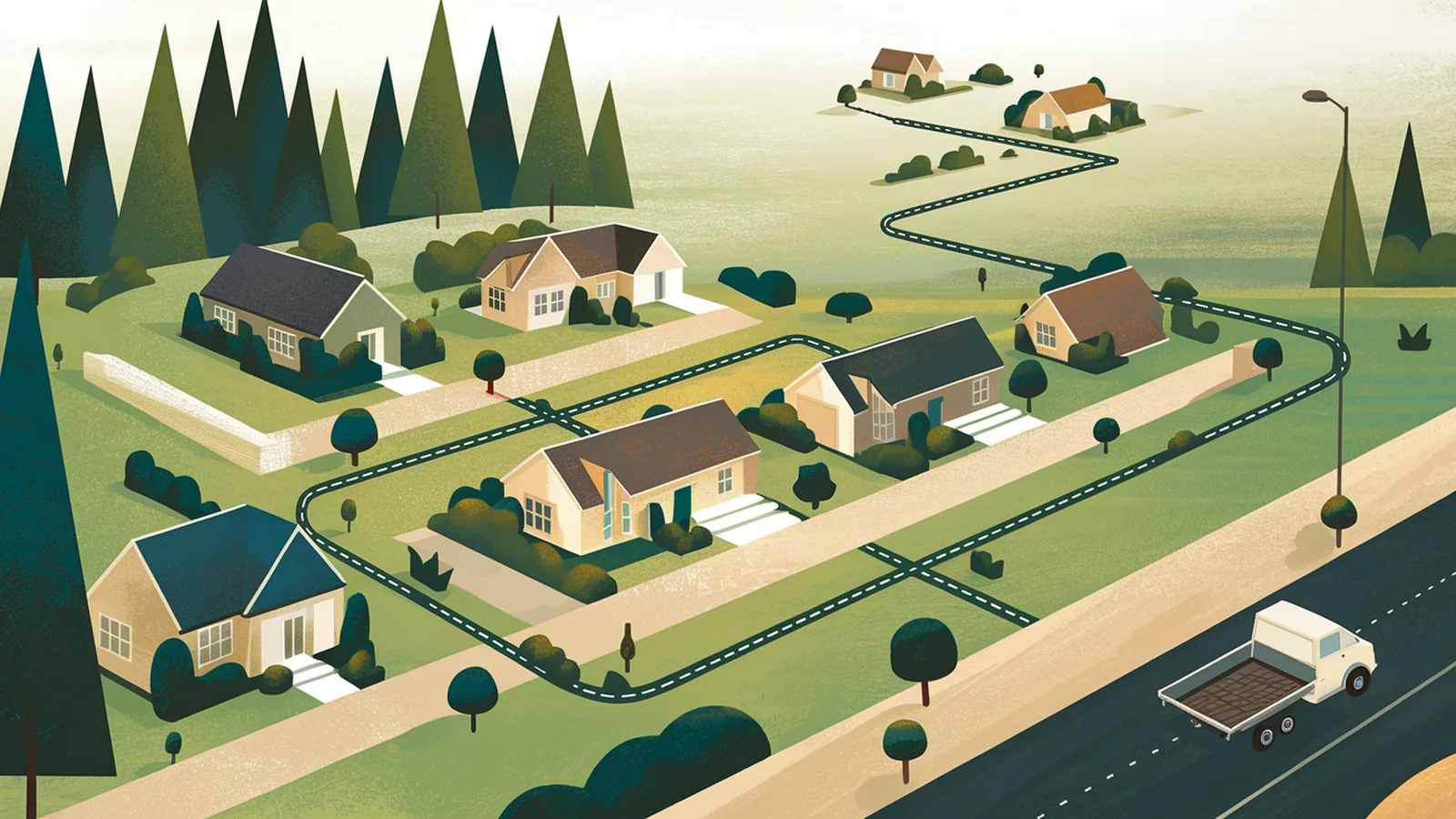
Thursday is your fullest day. Seventeen stops, the crew out past six, the highest billing of the week. It feels like the route that carries the business.
It might be the route that costs you the most. A full calendar tells you the crew was busy. It does not tell you what the day left behind once the truck was back in the yard.
Lawn care route profitability comes down to what a route earns for every hour the crew is committed to it, including the driving, the gates and the return trips. Winter is the time to measure it, while next season’s days and prices are still yours to set.
Why a busy route can still lose money
Routes rarely get designed. They accumulate. A customer signs up in June and goes on the day that had room. A referral two towns over gets added because saying yes felt better than saying no. By October the route is full, and nobody has looked at it as a whole since spring.
Four things wear a route down, and none of them show up on an invoice.
Drive gaps. Ten extra minutes between stops looks small. Across fifteen stops it is more than two crew-hours that nobody is paying for.
Revisit friction. A locked gate, a dog in the yard, a car parked on the strip. The crew comes back later or the next day, and one visit quietly becomes two.
Price drift. The oldest accounts on a route are often the cheapest. They were priced for a smaller business, and they have stayed there.
The long tail. One or two stops at the edge of the map stretch the whole day, and everything after them runs late.
The route scorecard
Score one route day at a time. Use two or three normal weeks, not the week of a storm or the first cut after rain. You need six lines.
1. Stops
How many visits the route holds. On its own this is the least useful number on the card, which is why it should never be the only one you look at.
2. Average drive gap
Total drive time between stops, divided by the number of gaps. Leave out the trip from the yard to the first stop and the trip home, and note those separately. A route with a six-minute average gap and a route with a fourteen-minute gap are different businesses.
3. Crew hours
From leaving the yard to returning, multiplied by the number of people. Loading, fueling and the dump run count. This is the time the route actually consumed, and it is always longer than the time spent mowing.
4. Revenue per route hour
What the route billed that day, divided by the hours from leaving the yard to getting back. This is the line that lets you compare a tight fourteen-stop day with a sprawling seventeen-stop day on the same scale. Compare it with what a crew-hour costs you, and you can see what the route leaves.
Work out what a crew-hour costs with the crew labor cost calculator
5. Payment behavior
How many accounts on the route pay within your terms, and how many need a reminder every month. A route full of slow payers costs office time and ties up cash, even when the mowing itself goes well.
6. Upsell potential
How many stops have bought, or could reasonably buy, more than the base visit: aeration, cleanups, mulch, snow. A dense route of basic mowing in a neighborhood that also buys seasonal work is worth more than its weekly billing suggests.
Worked example: the fuller route that keeps less
Every figure below is illustrative. These are example inputs, not industry benchmarks or a promise of margin. Replace each one with your own.
Assume a two-person crew whose loaded cost, covering wages, payroll burden, equipment, fuel and a share of overhead, comes to $100 per route hour.
Tuesday has 14 stops and bills $1,090. The crew is out for 8 hours with an average drive gap of 6 minutes. That is about $136 per route hour. After $800 of crew cost, the day leaves roughly $290.
Thursday has 17 stops and bills $1,275. The crew is out for 10.5 hours with an average drive gap of 14 minutes, and two stops needed a second attempt. That is about $121 per route hour. After $1,050 of crew cost, the day leaves roughly $225, before any overtime premium.
Thursday bills $185 more than Tuesday and keeps $65 less. Nothing about any single price on it looks wrong. The route is the problem.
Which stops drag a route down
Once a route scores low, look for the handful of stops doing the damage. They usually fall into four groups.
The outlier: a stop that adds a long detour compared with skipping it. The gate: a property where the crew regularly waits or returns. The legacy price: an account still paying what it paid three seasons ago. The slow payer: an account that takes two reminders and thirty extra days, every time.
Go back to the Thursday example. Two outlying stops bill $60 and $65. Each takes about 25 minutes on site and adds about 24 minutes of driving. Together they consume roughly 1.6 crew-route hours for $125 of billing.
Take them off Thursday and the route bills $1,150 over about 8.9 hours. Revenue per route hour rises to about $129, and the day leaves roughly $260. The route bills $125 less and keeps about $35 more, and the crew is home ninety minutes earlier.
Check single accounts with the job profitability worksheet
Rebalance, reprice or cut
Name the cause before choosing the fix. Work through the options in this order.
Rebalance first. Most outliers are only outliers on the day they were given. Move the stop to the day a crew is already nearby and it may become one of the better stops on that route. Before you move it, check what the change does to the stops on either side.
Reprice second. If the stop is fine but the price is old, bring it to your current rate at renewal and explain the change plainly. If the property is genuinely out of the way, a travel charge is more honest than a quiet loss.
Fix the friction. Ask for a gate code, a set service window or an unlocked side yard in writing. A return visit that the customer caused should be a billed visit, and the agreement should say so.
Cut last. Some stops will not work at any price you could reasonably charge. Give notice, finish the season well and, where you can, refer the customer to a company that works nearby.
See five ways to tighten the order of a route
Use the scorecard on new work too
The cheapest time to protect a route is before a stop joins it. Set a target for revenue per route hour from your best day. When a new request comes in, ask which route it would land on and what it would do to that number.
A new customer three doors from an existing stop is worth more than the same lawn across town, even at the same price. It is reasonable to quote them differently, and it is reasonable to say no to work that only fits by stretching a day that is already long.
Verdis keeps customers, properties and recurring visits in one place, so the stops on each crew’s day are in front of you when you plan next season instead of spread across a notebook and a phone.
See how Verdis handles crew scheduling
The takeaway
Score every route day before renewals go out. Keep the ones that clear your crew cost with room to spare. Rebalance the ones with a long tail, reprice the ones with old prices, and let go of the stops that only make the day longer.