The Crew Is Paid. The Customer Isn’t. Now What?
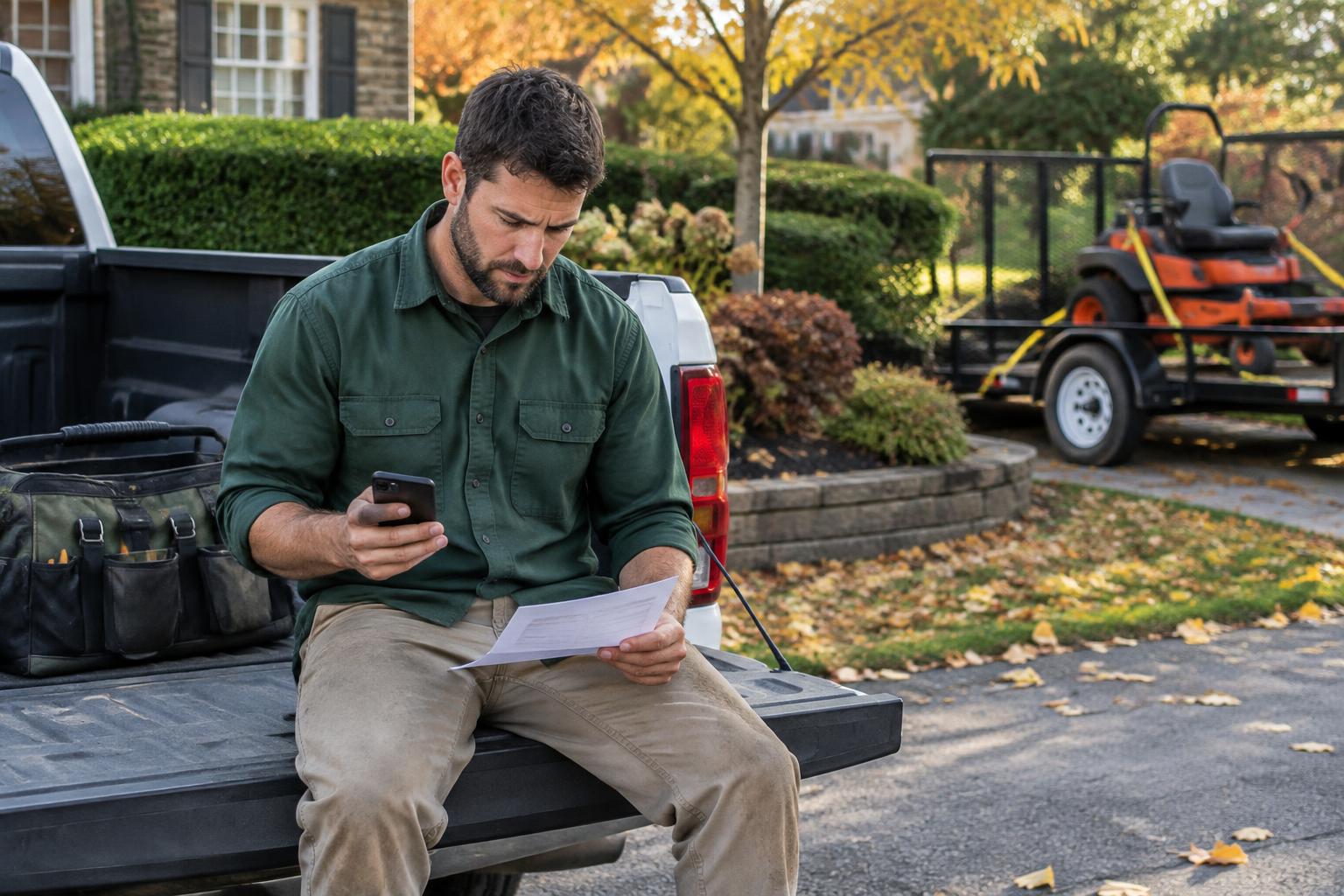
The lawn is cut. The mulch is down. Your crew has been paid, the fuel bill has cleared, and the customer’s property looks better than it did when you arrived. There’s just one part of the job that isn’t finished: the money hasn’t come in.
When the season slows down, unpaid landscaping invoices get harder to ignore. The calendar has fewer new jobs to cushion the gap, but your business still has bills. Another vague ‘just checking in’ text probably isn’t the process you need. Before winter, give every overdue invoice a specific next step.
A completed job is not the same thing as a collected payment. Close both loops.
1. Make one list—not five places to look
Start with every outstanding invoice in one place. Record the customer, property, invoice number, remaining balance, due date, last contact, and next action. A spreadsheet is enough to begin. If you already use invoicing software, use its unpaid and overdue views, then check them against payments you’ve actually received.
Separate balances that are not yet due from overdue ones. Then distinguish an invoice that needs a first reminder from one with a payment promise or an unresolved service concern. Those are different conversations. A customer who never received the bill should not get the same message as someone who disputed an extra charge.
2. Check your paperwork before chasing theirs
Before sending a reminder, verify that the invoice matches the approved work. Check service dates, property address, amounts, payment terms, and any add-ons. Was the extra hedge trimming approved? Did the invoice go to the homeowner or the property manager’s billing contact? Have you already received a check that hasn’t been recorded?
For a commercial account, ask whether a purchase order, vendor reference, or particular billing address is required. For a residential cleanup, make sure the service description explains what you did. ‘Property work’ invites questions. A description that matches the agreed scope gives the customer something they can recognize.
If your invoice is wrong, correct it and explain the correction. Don’t make the customer untangle your records. Keep the approved quote, job notes, and relevant correspondence together so you can answer questions without searching a month of text messages.
3. Send a reminder that can actually be answered
A useful reminder identifies the invoice, the service, the balance, and the due date. Include a fresh copy and your available payment instructions. Leave room for a simple explanation: the email went missing, the billing contact changed, or the customer believes they already paid.
First reminder: clear, friendly, specific
‘Hi [name], I’m following up on invoice [number] for [service/property]. The remaining balance is [amount], due on [date]. I’ve attached a copy with payment instructions. Could you confirm you received it? If you’ve already paid, please let me know when and how so I can check our records. Thank you.’
Replace every bracket with the actual details. Use the customer’s agreed contact channel, and avoid putting sensitive billing information in a public message or review response. The aim is a reply or payment—not an argument.
4. Turn ‘I’ll get to it’ into a date
If the invoice remains unpaid, follow up on a consistent schedule that fits your terms and the conversation. Record each contact and response. Several staff members sending separate reminders can create confusion; give one person responsibility for the next follow-up.
Second reminder: ask for the next step
‘Hi [name], invoice [number] still shows a balance of [amount] in our records. Could you let me know the date you expect to send payment? If there’s a question about the invoice or completed work, please tell me what needs clarification so we can address it.’
When someone promises payment, write down the date and confirm it back. If you agree to installments, document the amounts and dates rather than relying on a loose phone conversation. Don’t treat promised money as money already available for payroll or equipment purchases.
5. Handle a service concern as a service concern
Sometimes the delay isn’t forgetfulness. The customer thinks a bed was missed, questions a hauling charge, or doesn’t recognize an add-on. Ask exactly which part is in question, then review the scope, approvals, and completion records. A generic reminder will not resolve a specific concern.
When the customer questions the bill
‘Thanks for flagging this. Which service or charge on invoice [number] would you like us to review? I’ll check it against the approved scope and job records, then follow up with an explanation or correction.’
Keep disputed items distinct from the rest of the balance in your records. Don’t automatically add a late fee, threaten collections, or suspend service because a blog says you can. Your agreement and local rules matter. For a persistent dispute or a significant unpaid balance, get qualified local advice before escalating.
6. Finish the week with a next action for every balance
Your before-winter review should leave no invoice in the ‘we’ll see’ pile. Each one needs a recorded outcome: paid and reconciled, corrected and resent, awaiting a specific promised payment date, under review for a stated concern, or ready for professional advice. Put the next follow-up on your calendar.
Verdis brings customer details, quotes, jobs, and invoices into one workflow. That can reduce the hunt for what was approved and what still needs billing. It does not guarantee that a customer pays. The process still depends on accurate records, clear terms, and someone following through.
If you’re starting with paper invoices, the free landscaping invoice template linked below can help you send a clearer bill. If you’re already spending evenings matching invoices to jobs and messages, the landscaping invoicing software guide is the next place to look.
Overdue landscaping invoices: common questions
What should I do first when a landscaping customer hasn’t paid?
Confirm that payment is overdue under the agreed terms, check whether payment has already arrived, and verify that the invoice is accurate and went to the correct contact. Then send a specific reminder with the invoice and payment instructions.
What should a lawn care payment reminder include?
Include the invoice number, service or property, remaining balance, due date, a copy of the invoice, and available payment instructions. Ask the customer to confirm receipt or identify any question that is preventing payment.
Can I add late fees to an overdue landscaping invoice?
Do not assume you can add them after the fact. Review the terms the customer agreed to and the rules that apply where you operate. Ask a qualified local professional when you are unsure. This article is operational guidance, not legal advice.
Does invoicing software guarantee faster payment?
No. Software can help organize invoices, customer records, and follow-up, but payment still depends on the customer and the circumstances. Clear billing and consistent communication are useful whether you use a spreadsheet or a CRM.
Further reading
For additional practical guidance, see CLIP’s ‘How to Handle Past-Due Invoices in Your Lawn Care Business’ and QuickBooks’ ‘How to follow up on a past-due invoice.’ They support the basic approach here: check the details, communicate clearly, and keep a record. Neither replaces advice on your own contracts or local collection rules.
Next step
Set up a cleaner payment workflow.
Choose a practical next step if you want better invoices, faster payments, and less time spent chasing balances.
Ready to run your business, not just survive it?
Verdis gives you quotes, scheduling, invoicing, and CRM in one place — built for landscapers.
Start Your Free Trial